Many watershed and conservation practitioners who support farmers on their conservation journeys are seeking new ways to bring in more farmers, particularly those beyond the “conservation choir.” Practitioners want to know what has worked, what hasn’t, and how can they avoid recreating wheels.
Just launched are two new “playbooks” describing the design and impacts of two innovative, replicable approaches for engaging farmers around conservation practice adoption. The approaches are research-based and tested, providing practitioners models they can follow or riff on to augment their farmer outreach programming.
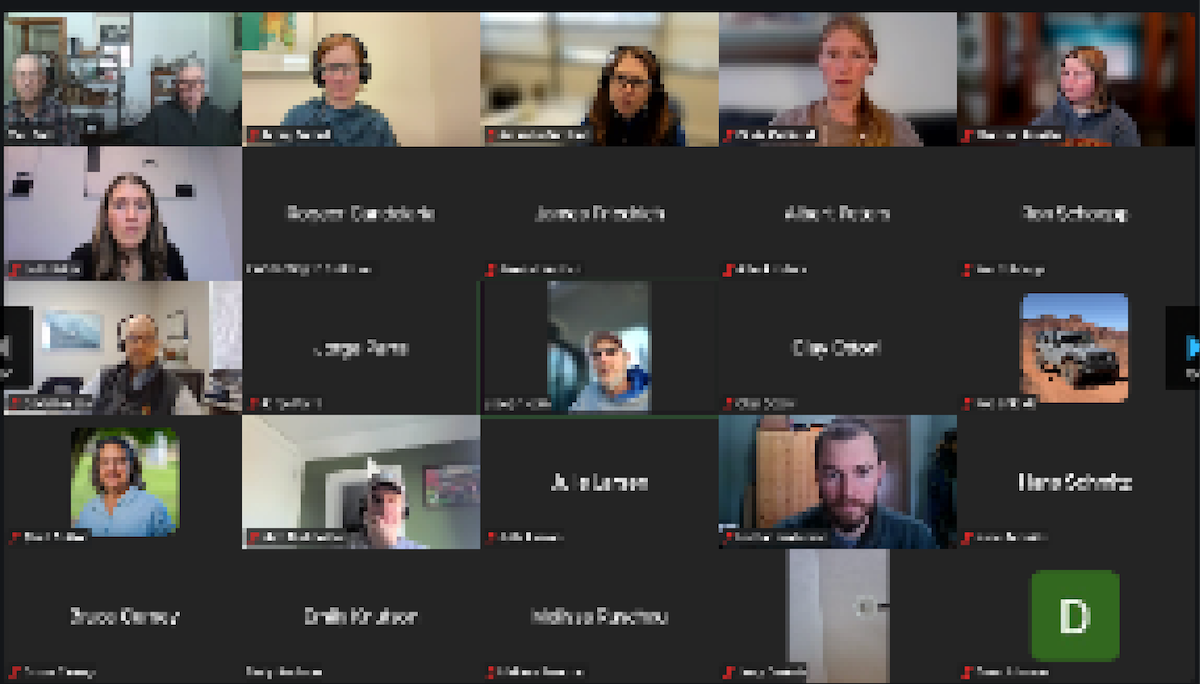
One playbook describes a virtual meet-up series for agricultural producers to exchange ideas about conservation practice implementation. Called Good Idea Shop Talks, the model entails peer learning and practical problem solving. It was designed to reach farmers beyond the choir of conservation, who tend to be more risk averse and more influenced by what their peers say and do. Its virtual format can also help make an outreach program more holistic.
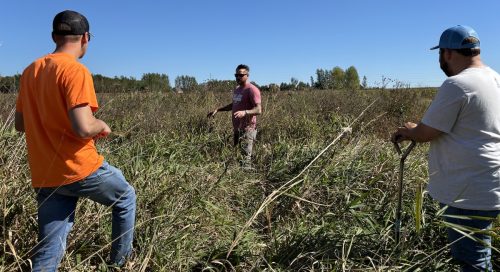
The second playbook describes Good Idea Mini-Grants, a funding and leadership development program that awarded small grants to teams of farmers and farm advisors to implement edge-of-field practices and produce a video or podcast about the practice to help other farmers learn from them. The teams also received training to hone their skills as peer leaders in conservation. In addition to facilitating practice adoption, this model was designed to empower potential peer leaders among farmers, so they can better support other farmers on their conservation journeys.
Both playbooks give play-by-play guidance for how to replicate the approaches. They also share why the approaches work and what results you can expect, based on the outcomes from their pilot runs.
Based on those pilot runs, there is evidence that the Shop Talks increased participation by middle adopter farmers – i.e., farmers who may not have yet adopted a practice and are more deliberative about conservation – and built a sense of community among participating farmers, particularly across a larger geography. The mini-grant program provided evidence of the benefits of relationship-building between farmers and farm advisors and of the value of flexible funding to implement edge-of-field practices.
Both approaches came out of One Good Idea, a farmer-to-farmer learning platform to increase the adoption of conservation practices. The platform started as a clearinghouse of crowdsourced videos and podcasts that feature farmers sharing their experiences implementing a variety of conservation practices. Good Idea Shop Talks and Mini-Grants expanded upon how the platform supports farmers’ conservation journeys.
Funding to develop and implement both the Shop Talks and mini-grant program was provided by the Foundation for Food and Agriculture (FFAR) and Walton Family Foundation through the Achieving Conservation Through Targeted Information, Outreach & Networking (ACTION) Program.